Markham, Ontario · Physician-performed
Botox in Markham
Botox® is a purified neuromodulator that temporarily relaxes the facial muscles responsible for dynamic wrinkles, softening frown lines, forehead lines, and crow's feet. Treatment is quick, requires no downtime, and delivers natural-looking, refreshed results while helping to prevent the formation of deeper lines over time.
- Price
- $10 per unit
- Appointment
- 30 minutes
- Performed by
- Dr. Mazzuca, MD
- Location
- Markham, ON
Book a Consultation Book Botox & Wrinkle Relaxers directly
Quick answer
Botox in Markham at Dr. Monique Mazzuca Aesthetics costs $10 per unit, is injected personally by a licensed physician (MD, CCFP) at 200 Cachet Woods Court, Suite 309, and takes about 30 minutes. It softens frown lines, forehead lines and crow's feet by relaxing the muscles that fold the skin. Results begin in 3 to 5 days, look complete at about 2 weeks, and typically last 3 to 4 months. New patients start with a $50 consultation.
What Botox is
Botox® Cosmetic (onabotulinumtoxinA) is a prescription neuromodulator approved by Health Canada for the temporary improvement of moderate to severe frown lines between the brows, horizontal forehead lines and crow's feet. It is the most studied product in its class, with more than two decades of cosmetic use worldwide, and it is a drug, which is why in Ontario it must be prescribed and the treatment must be directed by a physician or nurse practitioner.
In everyday language "Botox" is used for the whole category of wrinkle relaxers, the way "Kleenex" is used for tissues. The other neuromodulators available in Canada include Dysport®, Xeomin® and Nuceiva®. They work the same way and differ mainly in how the protein is formulated, how quickly they spread and how units are counted. Dr. Mazzuca selects the product for each patient at the consultation.
How Botox works
Lines like the "eleven" between the brows are dynamic wrinkles: they are creased into the skin by a muscle contracting thousands of times a day. Botox is injected in tiny amounts directly into that muscle, where it blocks the release of acetylcholine, the chemical signal from nerve to muscle. The muscle relaxes, the skin above it stops folding, and the line softens. Over months the nerve endings regenerate and movement returns, which is why treatment is repeated.
The skill is in the mapping, not the injecting. A face has dozens of expressive muscles that pull against each other. Relax the wrong one, or the right one too much, and the brow drops or the expression flattens. Dr. Mazzuca assesses how your muscles move before choosing where to place each unit, and she doses conservatively so that you keep expression and simply lose the crease.
What Botox treats
Cosmetic areas treated at the clinic:
- Frown lines (glabellar lines), the vertical "elevens" between the brows.
- Forehead lines, the horizontal lines that appear when you raise your brows.
- Crow's feet, the fan of lines at the outer corners of the eyes when you smile.
- Bunny lines on the sides of the nose, lip lines, a gummy smile, a downturned mouth (DAO), chin dimpling and a lip flip, all treated with small, precise doses.
- Masseter (jaw) slimming and relief of jaw clenching and grinding.
- Platysmal bands in the neck for a softer "Nefertiti" contour.
- Preventative or "baby" Botox: lighter doses to slow the etching of lines in patients who are starting early.
Dr. Mazzuca also uses neuromodulators medically for excessive sweating (hyperhidrosis) and chronic migraine. Those have their own pages.
How many units of Botox you need
Botox is dosed in units, and your total depends on the area, the strength of your muscles and how much movement you want to keep. The manufacturer's labelled doses are 20 units for frown lines, 20 units for forehead lines and 24 units for crow's feet, or 64 units for all three areas together. In practice Dr. Mazzuca often uses less than the label, particularly for first-time patients, women with fine features and anyone who wants a very natural look, and she adds at a two-week review if needed rather than over-treating on day one.
| Area | Typical range | At $10 per unit |
|---|---|---|
| Frown lines (glabella) | 12 to 25 units | $120 to $250 |
| Forehead lines | 6 to 20 units | $60 to $200 |
| Crow's feet (both sides) | 12 to 24 units | $120 to $240 |
| Upper face, all three areas | 30 to 64 units | $300 to $640 |
| Lip flip | 4 to 8 units | $40 to $80 |
| Masseter slimming (both sides) | 30 to 60 units | $300 to $600 |
These are ranges, not quotes. Your exact dose is confirmed at your assessment before anything is injected, and you only pay for the units used.
How much Botox costs in Markham
Dr. Mazzuca charges $10 per unit, which is in the lower half of what physician injectors in Markham, Richmond Hill and Vaughan charge (clinic prices across York Region generally run from about $9 to $16 per unit). There is no minimum area and no package requirement; you pay for what is placed. A first visit for new patients is the $50 Comprehensive Aesthetic Consultation (30 minutes), or a $20 virtual consultation (15 minutes) if you would like to talk it through from home first.
Because results last three to four months, most patients budget for three to four treatments a year. A typical upper-face patient using 40 units spends about $400 per visit, or roughly $1,200 to $1,600 a year. Botox is a cosmetic procedure and is not covered by OHIP; therapeutic uses such as hyperhidrosis or chronic migraine may be partly covered by private insurance and are discussed separately.
Who Botox is for, and who should wait
Good candidates are healthy adults who are bothered by lines that show when they frown, raise their brows or smile, and who want a softer, rested version of their own face rather than a frozen one. Many patients start in their late twenties or thirties to slow the etching of lines; others start in their fifties or sixties and see real softening of lines that have not yet become permanent creases.
Botox is not the right tool for everything. Deep lines that are visible at rest often need a combination of treatments (a neuromodulator plus microneedling or a small amount of filler), and sagging skin, hollowing and heavy brows are usually not Botox problems at all. Dr. Mazzuca will tell you if another treatment, or no treatment, is the better answer.
Treatment is postponed or avoided if you are pregnant or breastfeeding, have an active skin infection at the injection site, have a neuromuscular condition such as myasthenia gravis, ALS or Lambert-Eaton syndrome, have had an allergic reaction to a botulinum toxin product, or take certain medications (aminoglycoside antibiotics, for example). Tell Dr. Mazzuca about all medications and supplements at your consultation.
What the appointment is like
- Consultation and mapping. Dr. Mazzuca watches you frown, raise your brows and smile, feels the strength of the muscles, notes any asymmetry, and marks the injection points. She explains what she recommends and what it will cost before starting.
- Preparation. The skin is cleansed. Numbing is rarely needed; the needle is very fine and each injection feels like a brief pinch. Ice is available if you are sensitive.
- Injection. A full upper face takes about 10 minutes. You can talk normally throughout.
- Aftercare and follow-up. You leave with written instructions. Dr. Mazzuca offers a two-week review for first-time patients so the result can be checked and fine-tuned.
The whole visit is booked for 30 minutes. There is no downtime: most patients return to work or errands straight from the clinic. Small bumps at the injection points settle within 20 to 30 minutes.
When Botox starts working and how long it lasts
You will notice the muscle weakening in 3 to 5 days, with the full result at 10 to 14 days. This is why any touch-up is booked two weeks out, not sooner. Results typically last 3 to 4 months; crow's feet and forehead lines sometimes fade a little sooner than frown lines, and heavy masseters may need a first re-treatment at three months and then hold longer. Dysport tends to start a day or two faster; Xeomin is similar to Botox.
Regular patients often find that treatments last longer over time, because the muscle is used less and becomes smaller, and because the skin has a chance to recover when it is not being creased all day. The best long-term results come from a consistent schedule of three to four treatments a year rather than waiting until every line has fully returned. Spacing treatments at least three months apart also keeps the risk of antibody resistance very low.
Side effects and risks
Botox has an excellent safety record when it is prescribed and placed by a physician. Common, temporary effects are a small bruise, mild redness or swelling at the injection points and, occasionally, a headache in the first day or two. In clinical trials the most frequently reported reactions were headache (about 9% when forehead and frown lines were treated together), eyelid drooping (about 2% to 3%) and brow drooping (about 2%).
Less common problems include a heavy or "flat" brow if the forehead is over-treated, temporary asymmetry, and, rarely, a drooping eyelid (ptosis) if product migrates to the muscle that lifts the lid. These wear off as the product does, usually within a few weeks, and there are prescription eye drops that can help lift a drooping lid in the meantime. Spread of toxin effect beyond the injection site is a labelled warning for all botulinum toxin products; at cosmetic doses in the face it is very rare. Serious allergic reactions are extremely rare.
The most important safety factor is who is holding the syringe. Dr. Mazzuca is a licensed physician who manages any complication herself, and she uses only Health Canada-approved product purchased through the manufacturer's Canadian supply chain.
Aftercare: the first 24 hours
- Stay upright for four hours; avoid lying down, bending over for long periods or napping face-down.
- Do not rub, massage or press the treated areas for 24 hours, including facials, headbands and tight hats.
- Skip strenuous exercise, saunas, hot yoga and alcohol for 24 hours; they increase bruising and may affect spread.
- Gently "exercising" the treated muscles (frowning, raising the brows) in the first hour is fine and may help uptake, although the evidence is modest.
- Makeup can go on after a few hours once the injection points have closed.
- If you bruise, an ice pack and arnica help; bruises fade in 5 to 10 days.
To reduce bruising, avoid aspirin, ibuprofen, fish oil, vitamin E, ginkgo and alcohol for a few days beforehand unless a physician has prescribed them.
Botox vs Dysport, Xeomin and dermal filler
| Botox | Dysport | Xeomin | Dermal filler | |
|---|---|---|---|---|
| What it does | Relaxes muscle | Relaxes muscle | Relaxes muscle | Adds volume or structure |
| Best for | Lines caused by expression | Larger areas such as the forehead; fast onset | Patients who prefer a "naked" toxin with no complexing proteins | Lines and hollows present at rest; lips, cheeks, jawline |
| Onset | 3 to 5 days | 2 to 3 days | 3 to 5 days | Immediate |
| Lasts | 3 to 4 months | 3 to 4 months | 3 to 4 months | 6 to 18 months |
| Reversible | Wears off | Wears off | Wears off | HA fillers can be dissolved |
Many patients over 40 get the most natural result from a small amount of both: a neuromodulator to stop the creasing and a conservative filler or collagen biostimulator to replace lost support. Dr. Mazzuca plans these together rather than treating one line at a time.
Why patients choose a physician injector in Markham
In Ontario, injectables can legally be delegated to nurses and other staff working under a physician's medical directive, and at many med spas the prescribing doctor is never in the room. At this clinic the person assessing you and the person treating you are the same person, and that person is a licensed physician. Dr. Mazzuca is an MD with CCFP certification in family medicine and additional training in cosmetic medicine, facial anatomy, women's health and longevity medicine. Her registration is publicly verifiable through the College of Physicians and Surgeons of Ontario, and treatment is never delegated.
Her stated approach is to emphasise "subtle, elegant results that refresh rather than transform, using the least invasive treatments necessary to achieve safe, natural, and lasting outcomes."
Botox near you: serving Markham and York Region
The clinic is at 200 Cachet Woods Court, Suite 309, in the Cachet Woods professional buildings near Woodbine Avenue and Major Mackenzie Drive, with free parking on site and easy access from Highway 404. Patients visit from Unionville, Cachet, Angus Glen, Berczy Village, Cornell, Wismer, Markham Village, Thornhill, Richmond Hill, Stouffville, Vaughan, Aurora, Newmarket, North York, Scarborough and across the Greater Toronto Area. A virtual consultation is available if you would like to talk before you travel.
Frequently asked questions about Botox in Markham
How much does Botox cost in Markham?
Dr. Mazzuca charges $10 per unit. A typical frown-line treatment uses 12 to 25 units ($120 to $250); a full upper face uses 30 to 64 units ($300 to $640). You pay only for the units placed, and the dose is confirmed at your assessment before anything is injected.
How many units of Botox do I need?
It depends on the area and your muscle strength. Labelled doses are 20 units for frown lines, 20 for forehead lines and 24 for crow's feet. Dr. Mazzuca often starts below the label for a natural look and adjusts at a two-week review if needed.
How long does Botox take to work?
Most people notice softening in 3 to 5 days and see the full effect at 10 to 14 days. Dysport is often a day or two faster.
How long does Botox last?
Typically 3 to 4 months. Regular patients who treat before lines fully return often find results last longer over time as the muscle becomes less active.
Does Botox hurt?
It feels like a series of quick pinches. The needle is very fine and each injection takes a second. Numbing is rarely needed; ice is available.
Will I look frozen or fake?
Not with conservative dosing and correct placement. Dr. Mazzuca's approach is to soften the crease while preserving expression. If you want more relaxation, it can always be added at the two-week review; it cannot be taken away once injected.
Is Botox safe?
Botox is one of the most studied cosmetic treatments in the world and has an excellent safety record when prescribed and injected by a physician. Common side effects are minor and temporary (small bruise, mild headache). Eyelid or brow drooping occurs in about 2% to 3% of patients in trials and wears off. Dr. Mazzuca manages any concern personally.
What should I avoid after Botox?
Stay upright for four hours, do not rub or massage the area for 24 hours, and skip strenuous exercise, saunas and alcohol for 24 hours. Makeup can go on after a few hours.
Can I get Botox if I am pregnant or breastfeeding?
No. Botox is not recommended during pregnancy or while breastfeeding. Dr. Mazzuca will discuss other options and a timeline for treatment afterwards.
At what age should I start Botox?
There is no correct age. Botox is indicated for adults, and the right time is when lines are starting to show at rest or bother you when you express. Many patients begin in their late twenties or thirties preventatively; others begin decades later and still see a meaningful improvement.
What is the difference between Botox and filler?
Botox relaxes the muscle that creases the skin; filler adds volume or structure where it has been lost. Lines caused by expression are Botox problems; hollows, thin lips and lines present at rest are usually filler or biostimulator problems. Many patients benefit from a conservative combination.
Is Botox or Dysport better?
They are equivalent treatments with the same mechanism. Dysport spreads slightly more and starts a little faster, which can be an advantage on the forehead; Botox is more precise for small areas. Dr. Mazzuca will recommend a product at your consultation, and she can switch products for you at a later visit.
Can Botox be reversed?
No. Unlike hyaluronic acid filler, there is no dissolving agent. Effects wear off on their own over 3 to 4 months, which is one reason Dr. Mazzuca doses conservatively for first-time patients.
Who performs the injections?
Every treatment is performed by Dr. Monique Mazzuca, a licensed physician (MD, CCFP) with additional training in cosmetic medicine and facial anatomy. It is not delegated to a nurse or technician.
Do I need a consultation before Botox?
If you are new to the clinic, book the Comprehensive Aesthetic Consultation ($50, 30 minutes). Treatment is often possible on the same day if you are a suitable candidate. Returning patients can book Botox directly.
Where is the clinic located?
200 Cachet Woods Court, Suite 309, Markham, Ontario L6C 0Z8, in the Cachet Woods area near Woodbine Avenue and Major Mackenzie Drive, with parking on site.
Sources and further reading
- BOTOX Cosmetic prescribing information: indications, labelled doses and adverse reactions (AbbVie)
- BOTOX Cosmetic Canadian Product Monograph (AbbVie Canada)
- Botox Cosmetic: uses, dosage, side effects and warnings (Drugs.com)
- College of Physicians and Surgeons of Ontario, public register, for verification of Dr. Mazzuca's registration.
Every treatment on this page is booked through Dr. Mazzuca's secure online system. New patients begin with a consultation; returning patients can book the treatment directly.
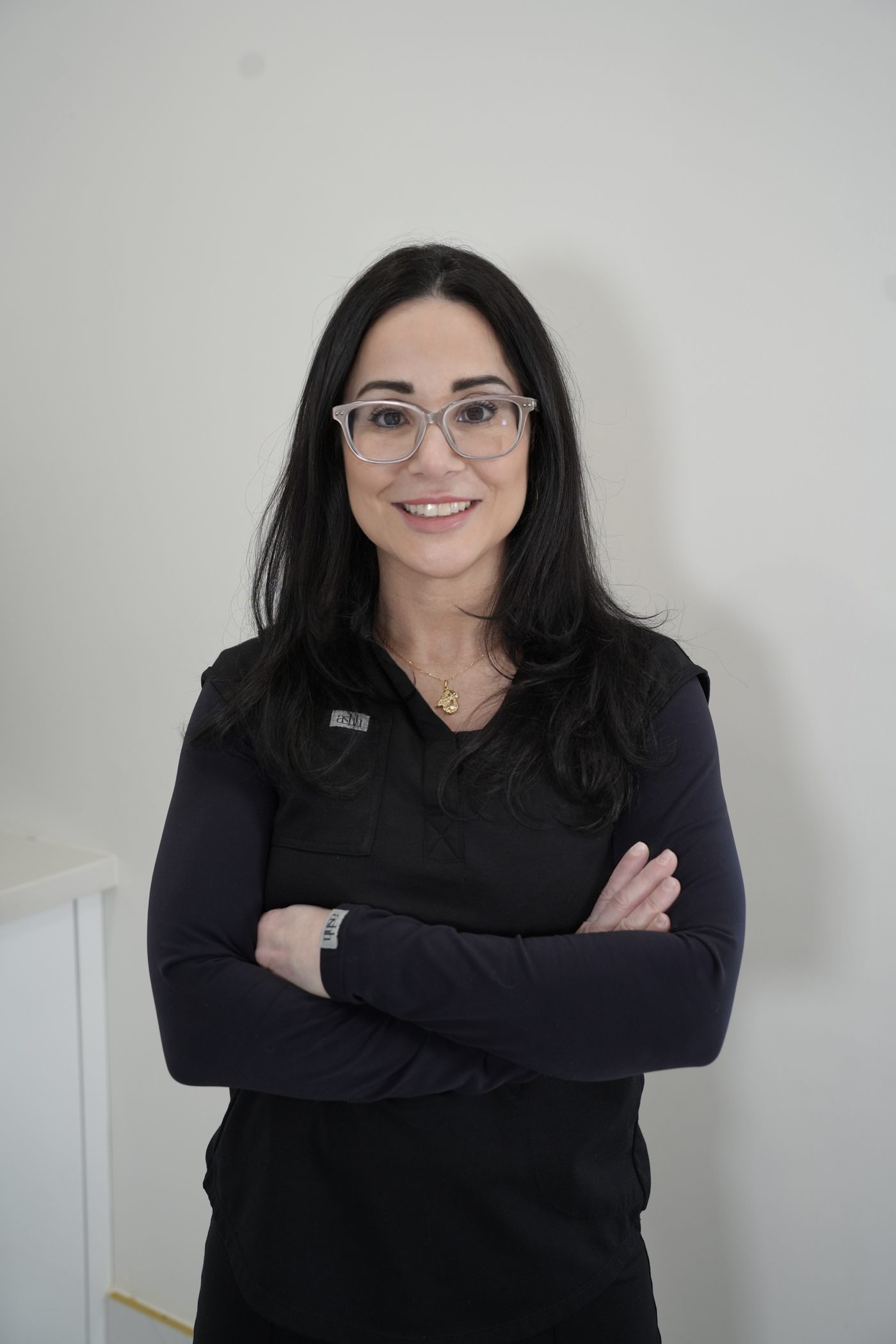
Dr. Mazzuca is a licensed physician practising medical aesthetics in Markham, Ontario, with additional training in cosmetic medicine, facial anatomy, women's health, and longevity medicine. Every treatment at the clinic is performed by her personally. Her registration can be verified through the College of Physicians and Surgeons of Ontario.
Written and medically reviewed by Dr. Monique Mazzuca, MD, CCFP. Last reviewed 2026-09-07.
This page is general information, not medical advice, and it is not a substitute for an in-person assessment. Results vary between patients, and every treatment carries risks that are reviewed with you before you consent. Suitability is determined by Dr. Mazzuca at your consultation.
Other treatments at the clinic
Book your botox appointment
See real-time availability and book directly with Dr. Mazzuca in Markham.
Book a ConsultationOr call 905‑605‑6745