Skin science · 6 min read
Demystifying Collagen
Collagen is the most marketed word in skincare and one of the least understood. What it is, what actually rebuilds it, and why the timeline is measured in months.

Collagen is a structural protein. It is the rope in the concrete: a mesh of fibres in the dermis, the living layer beneath the surface of the skin, that gives it thickness, firmness and the ability to spring back. Elastin, a second protein woven through it, provides the recoil. Together they are the reason young skin creases and then flattens out again, and the reason older skin creases and keeps the crease.
From roughly the mid-twenties, production slows. The figure most commonly quoted is a loss of about one percent per year, and while that is a rough average rather than a measurement of any individual, the direction is not in dispute. The decline accelerates around menopause, when falling estrogen affects skin collagen content, thickness and hydration; this is a well-documented area of dermatology research and one reason many women notice a distinct change in their skin over a relatively short span of years.
On top of the clock sits everything else: ultraviolet exposure, which degrades existing collagen and is the single largest modifiable factor, plus smoking, poor sleep, high blood sugar and chronic inflammation.
What "collagen stimulation" actually means
Almost every treatment marketed as collagen-boosting works the same way, and it is less glamorous than the language suggests: it creates a controlled, deliberate injury, and then lets your body repair it.
Wound healing runs in three phases. Inflammation comes first, over a few days. Then proliferation, over weeks, in which fibroblasts (the cells that manufacture collagen) migrate in and lay down new, disorganised fibres. Then remodelling, over months, in which that hasty scaffolding is gradually reorganised into stronger, better-aligned tissue. The visible improvement in your skin is the third phase, not the first.
This is why the timeline is what it is, and why the treatments that genuinely rebuild skin cannot be rushed. Different tools simply trigger the same cascade in different ways:
- Microneedling makes thousands of microscopic channels with fine needles, reaching the dermis while leaving the surface largely intact. Because it uses no heat or light, it is one of the safest options for deeper skin tones.
- Radiofrequency microneedling adds heat at the needle tips, causing immediate tightening of existing collagen plus a deeper remodelling response. More downtime, more effect on laxity.
- Medical peels remove a controlled depth of the surface, prompting renewal from below.
- Biostimulators such as Sculptra (poly-L-lactic acid) and Radiesse (calcium hydroxylapatite) are injected into the deeper layers, where the particles act as a scaffold and a signal; your body deposits collagen around them over months, and the particles themselves dissolve.
- Topical retinoids, unglamorously, have the best long-term evidence of anything you can buy. They increase collagen production gradually with consistent use over years.
The timeline, honestly
Here is roughly what to expect, and it is worth reading before you book anything.
| Weeks after treatment | What is happening | What you see |
|---|---|---|
| 0 to 1 | Inflammation, swelling, increased circulation | A glow, some redness. This is not collagen. |
| 2 to 6 | Fibroblasts arrive; new collagen is deposited | Early improvement in texture and tone |
| 6 weeks to 3 months | Remodelling; fibres reorganise and strengthen | Visible change in firmness, scars, fine lines |
| 3 to 6 months | Remodelling continues and matures | The real result. Best "after" photo. |
The glow in the first week is hydration and blood flow, and it fades. Patients who judge a collagen treatment at day seven are measuring the wrong thing at the wrong time. Patients who judge it at month four are usually pleasantly surprised.
Four misconceptions worth clearing up
"Collagen creams rebuild collagen." Collagen molecules applied to the surface are far too large to cross into the dermis, and even if they could, loose collagen is not what the skin needs; it needs fibroblasts to build organised fibres. Topical collagen is a decent humectant. It is not a structural treatment. Retinoids, sunscreen and vitamin C have the evidence; collagen creams do not.
"Collagen supplements are a substitute for treatment." Oral collagen peptides are digested into amino acids like any other protein. Some randomised trials do show modest improvements in skin hydration and elasticity, so the effect is not zero, but it is small and it is not equivalent to what a device or injectable does in the dermis. If you enjoy taking them, they are unlikely to hurt. They will not replace sunscreen.
"One session will do it." Very few collagen treatments produce meaningful structural change in a single visit. Microneedling for texture is typically three sessions; for acne scars, four to six. Sculptra is usually two to three. A single session gives you a preview, not a result.
"More aggressive is always better." The healing response is not linear. Too much injury produces disorganised repair, which is what a scar is. Depth, energy and interval are chosen to stay in the window where the body builds well-aligned tissue. This is the part of the treatment that is judgement rather than settings.
Protecting what you build
Everything above rebuilds collagen. Ultraviolet light degrades it, continuously, including through cloud and window glass. A patient who invests in a series of treatments and then skips sunscreen is filling a bath with the plug out. Daily broad-spectrum SPF is not an upsell; it is the single highest-return decision in skin health, and it matters more in the weeks after any collagen treatment, when the skin is actively remodelling.
After that, the list is short and boring: a retinoid at night if your skin tolerates it, sleep, not smoking, and reasonable blood sugar. Most of what works is unglamorous, which is precisely why it gets crowded out by things that are not.
Common questions
How long does it take to see results from collagen treatments?
Early improvement in texture at two to six weeks, visible change in firmness and scars from six weeks to three months, and the mature result at three to six months. The glow in the first week is circulation and hydration, not collagen.
Do collagen creams work?
Not structurally. Collagen molecules are too large to penetrate to the dermis where they would be needed, and the skin needs fibroblasts to build organised fibres rather than loose collagen delivered to the surface. Retinoids, sunscreen and vitamin C have far better evidence.
Do collagen supplements work?
Some randomised trials show modest improvements in skin hydration and elasticity, so the effect is not zero, but it is small and it is not equivalent to a device or injectable treatment. They are unlikely to do harm if you enjoy taking them.
How many microneedling sessions do I need to build collagen?
Typically three sessions about four weeks apart for texture, tone and fine lines, and four to six for acne scars, followed by maintenance every three to six months. Collagen continues building for three to six months after the final session.
What is the difference between microneedling and a biostimulator like Sculptra?
Microneedling triggers collagen through controlled micro-injury at the skin's surface layers and improves texture, pores and scars. Sculptra is injected deeper and prompts collagen around its particles to restore volume and firmness over months. They address different layers and are often used together.
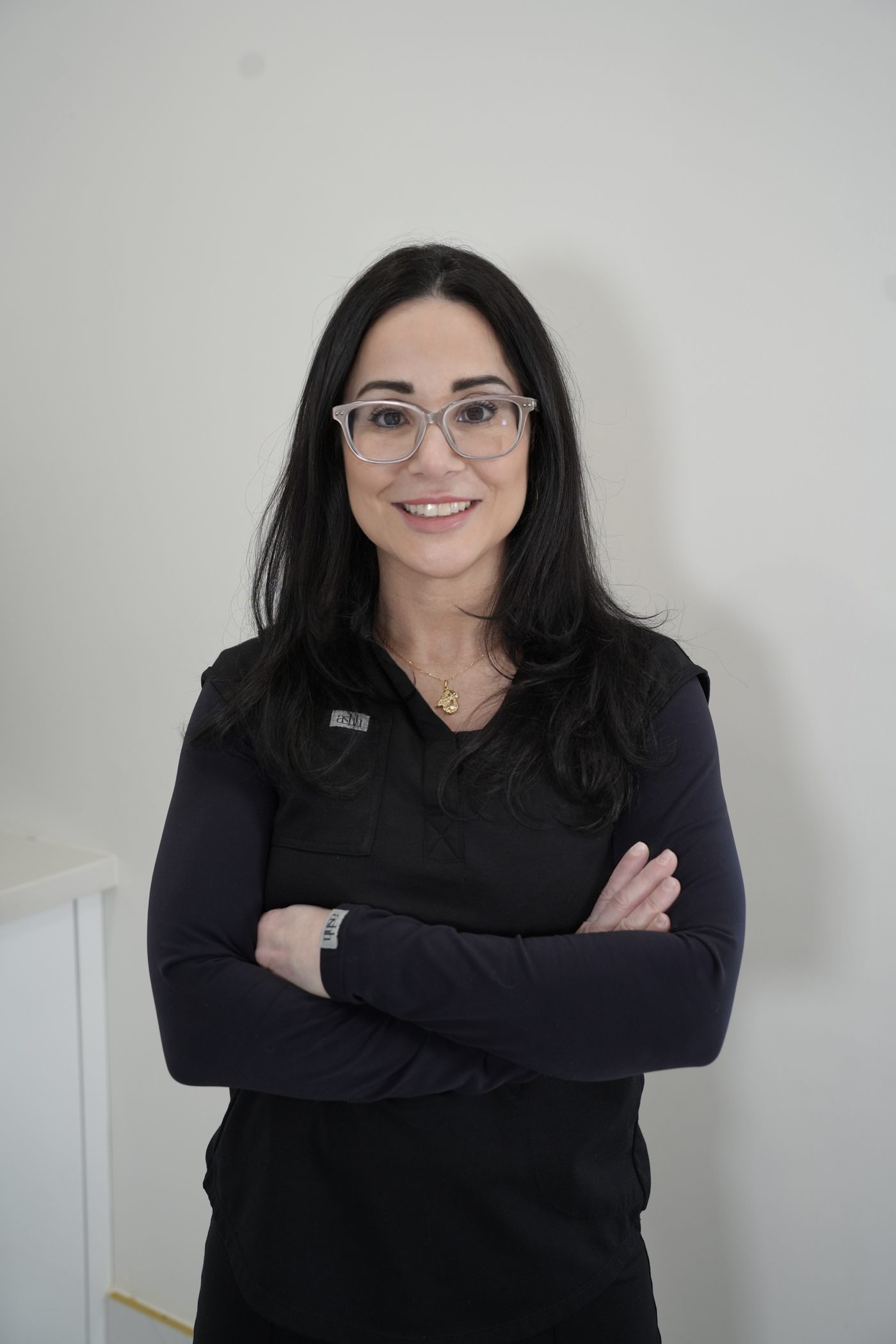
Dr. Mazzuca is a licensed physician practising medical aesthetics in Markham, Ontario, with additional training in cosmetic medicine, facial anatomy, women's health, and longevity medicine. Every treatment at the clinic is performed by her personally. Her registration can be verified through the College of Physicians and Surgeons of Ontario.
Written and medically reviewed by Dr. Monique Mazzuca, MD, CCFP. Published September 8, 2026.
This article is general information, not medical advice, and it is not a substitute for an in-person assessment. Results vary between patients, and every treatment carries risks that are reviewed with you before you consent. Suitability is determined by Dr. Mazzuca at your consultation.
More from the Journal


