Philosophy · 5 min read
The Anatomy of a Natural Result
The best work in aesthetic medicine is the work nobody can point to. That is not an accident of taste. It is a set of decisions, made in a particular order.

Patients almost never walk in asking to look treated. They ask to look less tired. They say they catch themselves in a photograph and do not recognise the expression. They say their mother's jawline arrived a decade earlier than expected. What they want is recognisability: to look like themselves, on a good day, with eight hours of sleep behind them.
And yet the results that get noticed in public are the ones that failed at exactly that. This is a sampling problem. Work that reads as natural is, by definition, invisible, so the only examples most people can name are the ones that went too far. It leaves patients with a distorted sense of what these treatments do, and it makes some of them wait years longer than they needed to.
So it is worth setting out what actually produces a natural result. It is less mysterious than it looks.
It starts with diagnosing the right problem
The single most common reason a result looks wrong is that the right problem was never identified. A line on the face is a symptom. The question is what is producing it.
A crease between the brows that appears only when you concentrate is a muscle problem, and relaxing that muscle solves it. The same crease, visible when your face is completely at rest, is now partly etched into the skin, and no amount of muscle relaxation will erase it; that needs the skin itself rebuilt over months. A fold running from the nose to the mouth corner is usually not a fold problem at all. It is a cheek problem: support above it has descended, and the tissue has to gather somewhere. Fill the fold directly and you get a heavy, doughy lower face. Restore the cheek and the fold softens on its own.
This is why an assessment involves watching a face move rather than looking at a photograph of it at rest. In a consultation I will ask you to frown, lift your brows, smile fully and then relax completely, because those four seconds separate a dynamic problem from a structural one. Treating the wrong category is the fastest route to a result that looks like something was done.
Proportion is a medical judgement, not an aesthetic one
Faces are systems under tension. The muscles that lift the brow are opposed by the ones that pull it down. Volume in the upper cheek changes how light falls three centimetres below it. Relax one muscle completely and its antagonist takes over, which is how an over-treated forehead produces heavy, low brows and a slightly cross expression that nobody asked for.
The same applies to volume. There is a threshold beyond which added product stops reading as fullness and starts reading as width. It is different in every face, and it is the reason that a treatment plan built one syringe at a time, over years, without anyone stepping back to look at the whole, tends to drift. Each individual decision was defensible. The sum of them was not.
A physician's training is largely training in anatomy and in systems: how structures relate, what compensates for what, where the arteries run. That is the part of this work that is medicine rather than decoration.
Restraint is a technique, not a personality trait
The most useful rule in aesthetic medicine is that you can always add, and you can rarely subtract. Neuromodulators wear off in three to four months, so an over-treated brow is a season of looking slightly not-yourself. Hyaluronic acid filler can be dissolved, but dissolving is its own procedure with its own swelling and its own imprecision. Collagen biostimulators such as Sculptra and Radiesse cannot be reversed at all; they can only be waited out.
So the sequence that produces natural results is deliberately conservative: treat below what the label allows, review at two weeks, and add if the patient wants more. That review appointment is not a formality. It is where the plan gets calibrated to a real face rather than an average one. Patients who come in expecting a single decisive treatment are sometimes surprised to be asked back. It is the least efficient way to run a clinic and the most reliable way to produce a result nobody can point to.
Skin quality does more work than most people expect
A great deal of what reads as "young" is not shape at all. It is light. Skin that is even in tone, smooth in texture and well hydrated reflects light in a continuous way; skin that is rough, mottled or thin scatters it, and the face reads as tired regardless of its underlying structure.
This is the part patients most often skip, because it is slower and less dramatic than an injection. Microneedling, medical peels, light-based treatments and a genuinely simple home routine (a retinoid, sunscreen, and not much else) change the quality of the canvas. In practice, a patient who invests in skin quality usually needs less injectable over time, not more, and the injectable they do have looks better because it sits under better skin.
What a natural result actually looks like
People close to you notice that you look well. They guess a holiday, better sleep, a new haircut. Your expressions still work: you can look surprised, sceptical, delighted. In photographs, the shadows that had started to sit under your eyes and around your mouth are softer, but the face is unmistakably yours. Nothing about you announces a procedure, because nothing was done that needed announcing.
That outcome is not the product of a particular product or device. It comes from correctly identifying what is happening, respecting the proportions of the face you already have, using the least intervention that will do the job, and being willing to say that some of what is bothering you is better addressed slowly, or not at all.
Common questions
What makes injectable results look obvious or fake?
Usually one of three things: treating a symptom instead of its cause (filling a fold rather than restoring the cheek support above it), over-relaxing one muscle so its opposing muscle takes over, or adding volume past the point where a face reads as full rather than wide. All three are decisions, not products.
Can I still have expressions after Botox?
Yes, with conservative dosing. The goal is to soften the crease while leaving the movement that makes your face yours. Dr. Mazzuca typically starts below the labelled dose and adds at a two-week review if you want more relaxation, because it can always be added and never removed.
Is it better to do less or wait until I need more?
Doing less, earlier, is usually easier to keep natural than doing a lot, later. But there is no obligation to start, and a treatment that will not meaningfully help is not worth having at any age.
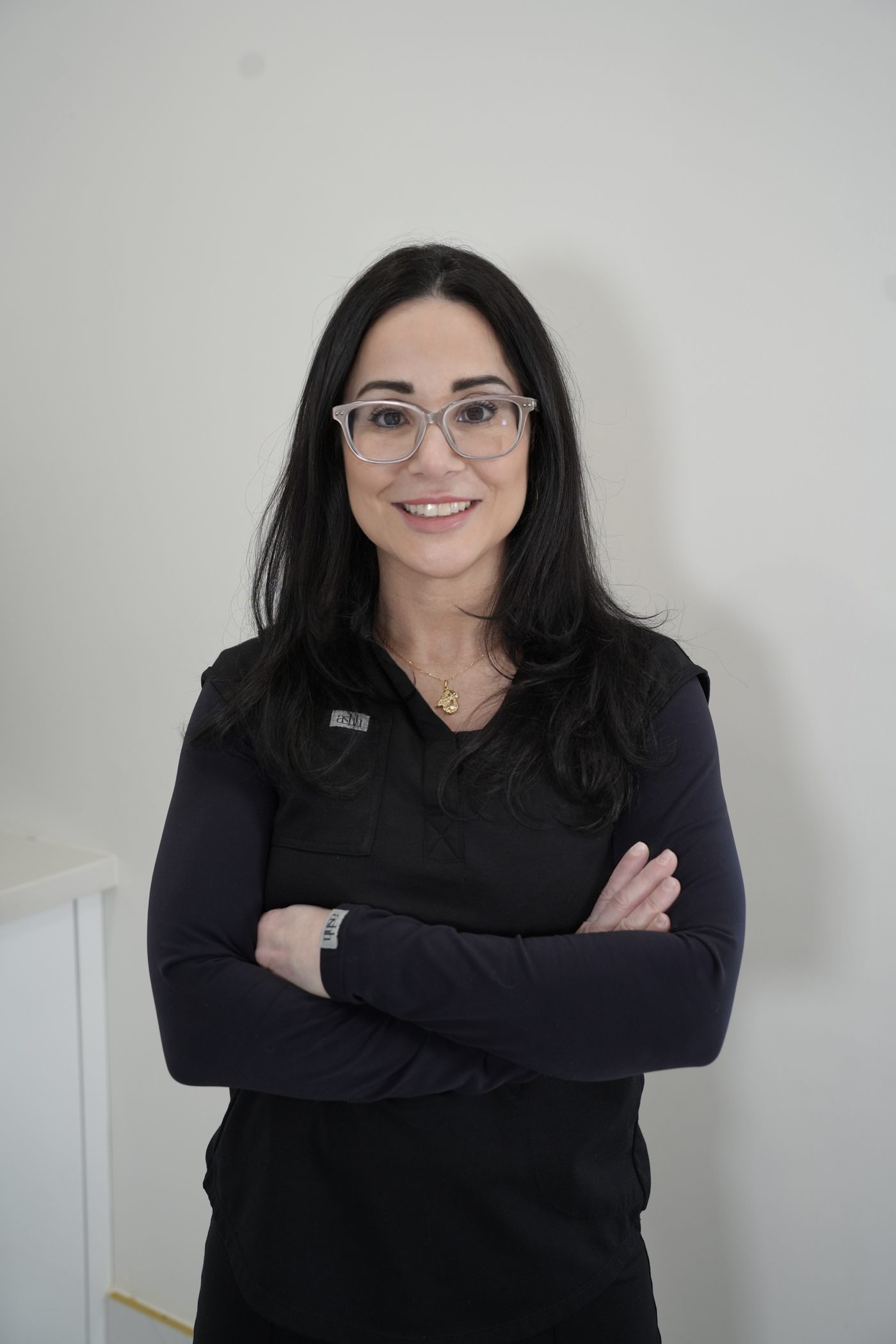
Dr. Mazzuca is a licensed physician practising medical aesthetics in Markham, Ontario, with additional training in cosmetic medicine, facial anatomy, women's health, and longevity medicine. Every treatment at the clinic is performed by her personally. Her registration can be verified through the College of Physicians and Surgeons of Ontario.
Written and medically reviewed by Dr. Monique Mazzuca, MD, CCFP. Published September 8, 2026.
This article is general information, not medical advice, and it is not a substitute for an in-person assessment. Results vary between patients, and every treatment carries risks that are reviewed with you before you consent. Suitability is determined by Dr. Mazzuca at your consultation.
More from the Journal


