Ethics · 4 min read
Why We Say No
Every clinic will tell you it is honest. The test is what happens when a patient asks for something they should not have.

There is a structural problem at the centre of aesthetic medicine, and it is worth naming plainly: the person advising you on whether you need a treatment is usually the person who profits from selling it. Every other part of medicine builds safeguards around that conflict. This part of medicine largely does not.
The safeguard that remains is professional judgement, and the only visible evidence that it is working is a clinic's willingness to decline. So here is when we do.
When the treatment will not fix the problem
This is the most common reason, and it is almost always a diagnostic mismatch rather than a moral one.
Someone comes in wanting filler for the hollows under their eyes. On examination the hollowing is minimal; what is actually there is thin, crepey skin and a shadow cast by the cheek below. Filler placed into that will not brighten the area. It will sit in tissue too thin to hide it, and in some patients it holds water and produces a puffiness that is worse than the shadow they came in about. The honest answer is that skin quality, not volume, is the problem, and that a series of treatments for the skin will do more than a syringe of anything.
Or someone wants a neuromodulator for lines that are present when their face is completely still. Relaxing the muscle will stop those lines from deepening, which is worth doing, but it will not erase what is already etched. If the patient is expecting erasure, treating them produces a disappointed patient and a bill. Saying so first produces a patient who knows what they are buying.
Or, occasionally, the honest answer is that the concern is a surgical one. Significant skin laxity does not respond to energy devices in the way patients hope. No amount of radiofrequency substitutes for a facelift. Selling six sessions of something that will produce a fraction of the desired change, when the patient has told you what they want, is not a service.
When it is the wrong time
Some treatments are simply postponed. Pregnancy and breastfeeding rule out neuromodulators and most injectables. Active acne, a cold sore, eczema or any infection in the treatment area means microneedling waits until the skin is calm, because needling through an active infection spreads it. Recent isotretinoin, recent radiation, an unstable autoimmune condition, a bleeding disorder or blood thinners that cannot be paused all change the calculation.
There are also softer versions of wrong timing. A patient who wants filler four days before a wedding is asking for bruising in their photographs. A patient who has just had a significant loss, or is in the middle of a hard year, sometimes wants a procedure to fix something that a procedure does not reach. Those conversations are gentler, but the answer is often the same: not this week.
When the request would take you further from looking like yourself
This is the hardest category, because the patient is not wrong to want something and the treatment would technically work.
Someone arrives with a photograph of a face that is not structurally like theirs and asks to be moved toward it. Someone who has had a great deal of filler already wants more, and cannot see that the fullness they are reading as "not enough yet" is the reason their face no longer reads as theirs. Someone fixates on a feature that is, in fact, unremarkable, with an intensity that suggests the distress is not really about the feature.
That last one has a name, body dysmorphic disorder, and it is meaningfully more common in cosmetic practice than in the general population. Treating it with a procedure does not help; the distress typically transfers to the next feature. The right response is to decline the procedure and, where appropriate, to say clearly that support exists and that a physician can help arrange it.
What "no" should sound like
A refusal that is only a refusal is not much use. What a patient deserves is the reasoning, and an alternative if one exists.
So the answer is rarely just no. It is usually: this is what I think is actually producing what you are seeing, this is why the treatment you asked about will not address it, here is what would, and here is what it would take. Sometimes the alternative is a different treatment. Sometimes it is a series rather than a session. Sometimes it is a skincare routine and a follow-up in six months. And sometimes, genuinely, it is that your face is fine and you do not need anything, which is an answer patients almost never expect to hear in a room like this one.
Why this is the whole business model
A clinic that never declines anything will be more profitable this quarter. It will also be full of patients who slowly stop trusting it, and eventually of faces that look treated. A clinic that declines when it should keeps patients for fifteen years, and those patients send their friends, because the thing they actually valued was not the syringe. It was being told the truth by someone qualified to know it.
That is the entire argument for physician-led care, and it is not really about credentials. It is that the person in the room should have a professional obligation that outranks the sale.
Common questions
Will Dr. Mazzuca ever recommend no treatment?
Yes, and regularly. If a treatment is unlikely to help, is not the right time, or would take you further from looking like yourself, she will say so and explain what she thinks is actually producing your concern.
What if I want a treatment and I am told no?
You will be told why, and what the alternative is. That may be a different treatment, a series instead of a single session, a skincare plan, or a recommendation to wait. The reasoning is always given, not just the decision.
When are aesthetic treatments postponed?
Pregnancy and breastfeeding, active infection or breakout in the treatment area, recent isotretinoin, recent radiation, unstable autoimmune conditions, bleeding disorders or blood thinners that cannot be paused, and events too close to allow bruising to settle.
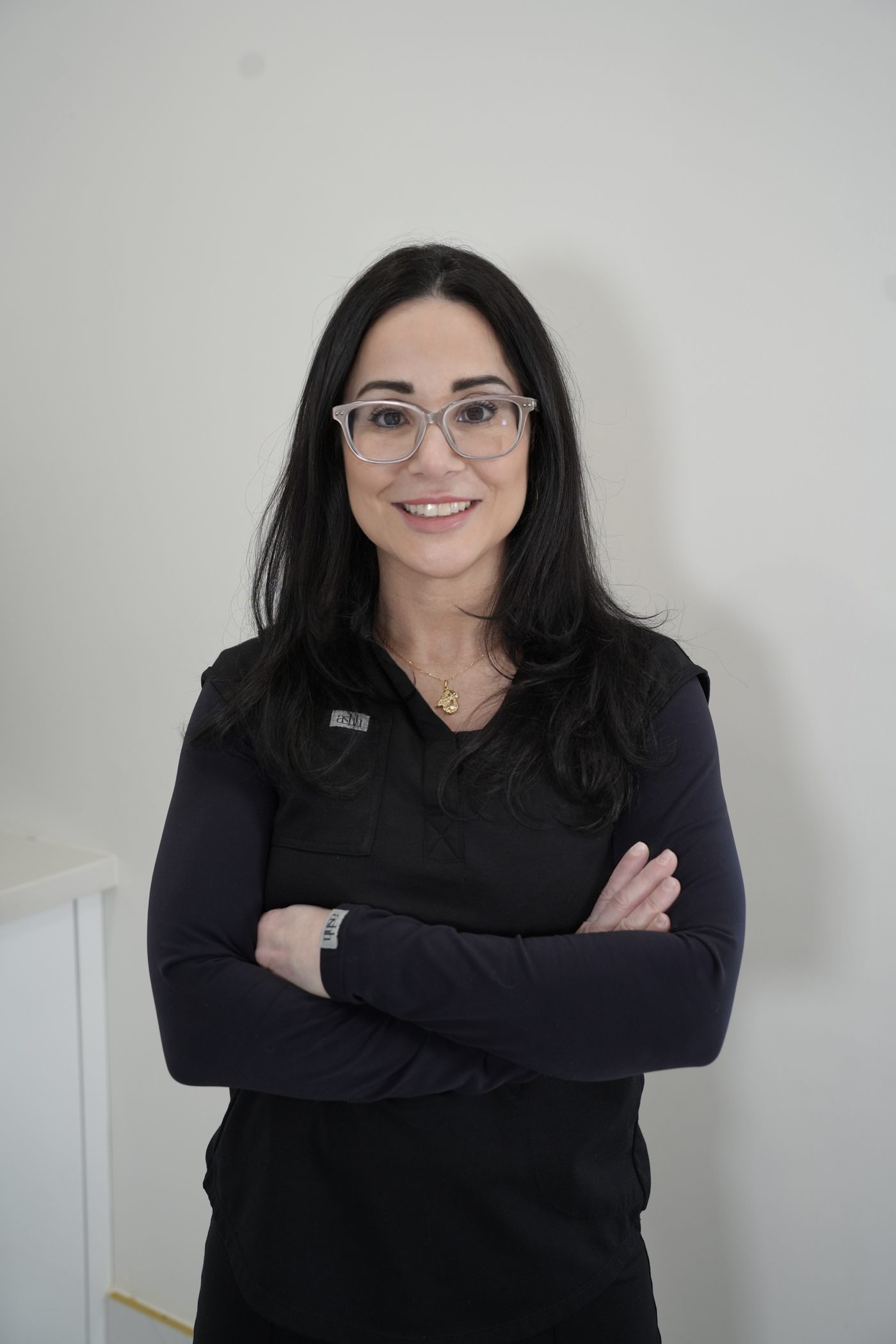
Dr. Mazzuca is a licensed physician practising medical aesthetics in Markham, Ontario, with additional training in cosmetic medicine, facial anatomy, women's health, and longevity medicine. Every treatment at the clinic is performed by her personally. Her registration can be verified through the College of Physicians and Surgeons of Ontario.
Written and medically reviewed by Dr. Monique Mazzuca, MD, CCFP. Published September 8, 2026.
This article is general information, not medical advice, and it is not a substitute for an in-person assessment. Results vary between patients, and every treatment carries risks that are reviewed with you before you consent. Suitability is determined by Dr. Mazzuca at your consultation.
More from the Journal


