Practical · 5 min read
Before Your First Consultation
What to bring, what to stop taking beforehand, what happens in the room, and the questions worth asking. Most of it takes ten minutes to prepare.

A first consultation in aesthetic medicine is a medical appointment that most people prepare for like a retail one. That is understandable, and it is worth resetting, because what you bring into the room largely determines how useful the hour is.
Here is what to do beforehand and what to expect.
In the week before
Pause anything that thins the blood, if you can. Aspirin, ibuprofen, naproxen, fish oil, vitamin E, ginkgo and high-dose turmeric all increase bruising. Stopping them for about five days before an appointment where you might be treated makes a visible difference. The critical exception: if a physician has prescribed a blood thinner or daily aspirin for a medical reason, do not stop it. Tell us instead, and we will plan around it.
Skip alcohol for 24 hours beforehand. Same reason.
Take photographs of the thing that bothers you. This is the most useful preparation and almost nobody does it. Concerns are often intermittent: the way you look at the end of a long day, in overhead lighting, in a photograph someone else took. If the thing you want addressed is not visible at eleven in the morning in a well-lit room, bring the picture where it is. A photograph of yourself from ten years ago is also genuinely useful, because it shows what has changed rather than what you dislike.
Write down your medical history. All medications and supplements, allergies, previous cosmetic treatments and roughly when, any autoimmune conditions, bleeding disorders, cold sores, keloid scarring, recent isotretinoin, recent vaccinations, and whether you are pregnant or breastfeeding. This is not paperwork for its own sake; each item genuinely changes what can be recommended.
On the day
Come with a clean face if you can, or minimal makeup. It is easier to assess skin you can see, and if you decide to proceed with treatment on the same day, makeup has to come off anyway.
Come when you are not rushed. A consultation here is booked for thirty minutes and the useful part of it is conversation, which does not compress well.
Bring the photographs, the medication list, and, if you have them, the details of previous treatments: which product, roughly how much, when, and whether you liked the result. Patients often cannot recall what they have had, which is fair, but any detail helps, particularly if a previous filler needs to be accounted for.
What actually happens in the room
The first part is listening. What bothers you, when you notice it, how long it has bothered you, what you have already tried, and what you are hoping for. It is worth being specific here. "I look tired even when I am not" points somewhere quite different from "I want to look less angry," which points somewhere different again from "my jawline has changed."
The second part is examination. You will be asked to make expressions: frown, raise your brows, smile fully, then relax completely. This is how a dynamic problem is distinguished from a structural one, and it is the step that determines almost everything that follows. Your skin will be assessed for quality, thickness, tone and sun damage, and the underlying structure for volume and support.
The third part is explanation. You should leave understanding what is producing what you see, what would address it, what would not, roughly what it would cost, and what the realistic timeline is. If a treatment would help only partly, you should hear that. If nothing is needed, you should hear that too.
Whether you are treated on the same day depends on what is recommended and on how you feel. Some treatments can be done immediately. Others are better scheduled, either because they need preparation or because a decision made in ten minutes about something irreversible is not a decision worth rushing.
Questions worth asking
- What do you think is actually causing what I am seeing?
- Is there anything I have asked about that would not help, and why?
- What would you do first if this were your face, and why that first?
- How many units or syringes, and what is the total cost?
- What does this look like at two weeks, three months, a year?
- What are the risks, and what do you do if one happens?
- What happens if I do nothing for a year?
That last question is more revealing than it sounds. A useful answer describes what will and will not change. An answer built on urgency is a sales answer.
A note on arriving with a plan
Many patients arrive having decided what they want, often from a friend's recommendation or something they saw online. That is a reasonable starting point and it is welcome. But faces differ more than the internet suggests, and a treatment that produced a beautiful result for someone else may be addressing a problem you do not have.
The most productive framing is to bring the problem rather than the prescription. Say what bothers you and when. Let the assessment determine the tool. If you have a strong preference, say so, and it will be discussed honestly, including the parts of your concern that preference will not solve.
If you are nervous
A large proportion of first-time patients are, and many say so apologetically, as though ambivalence were a problem. It is not. A consultation is a conversation, not a commitment, and there is no obligation to book anything at the end of it. Being told what is going on with your face by someone qualified to explain it has value on its own, and plenty of people leave with a skincare plan and a follow-up rather than a treatment.
Consultations are available in person at the Markham clinic or by secure video if you would prefer to talk it through from home first.
Common questions
How should I prepare for an aesthetic consultation?
Pause blood-thinning supplements and anti-inflammatories for about five days if a physician has not prescribed them, skip alcohol for 24 hours, come with a clean face, and bring photographs of what bothers you along with a list of your medications, allergies and previous treatments.
What happens during a consultation with Dr. Mazzuca?
She listens to what is bothering you, examines your face in motion and at rest to distinguish muscle problems from structural ones, assesses your skin, and then explains what is causing what you see, what would help, what would not, the realistic timeline and the cost.
Will I be treated at the first appointment?
Sometimes. If a treatment is suitable and you feel ready, it can often be done the same day. Some treatments are better scheduled separately, and there is never an obligation to proceed on the day.
What should I bring to my consultation?
Photographs of the concern as it appears when it bothers you most, a photograph from several years ago if you have one, a list of all medications and supplements, your allergies, and details of any previous cosmetic treatments.
Do I have to book a treatment at the consultation?
No. A consultation is a conversation, not a commitment. Many patients leave with a skincare plan and a follow-up rather than a treatment, and some are told they do not need anything.
Can I have a virtual consultation instead?
Yes. A 15-minute secure video consultation is available if you would prefer to discuss your goals before travelling to the clinic, and it is a good option for patients outside the Markham area.
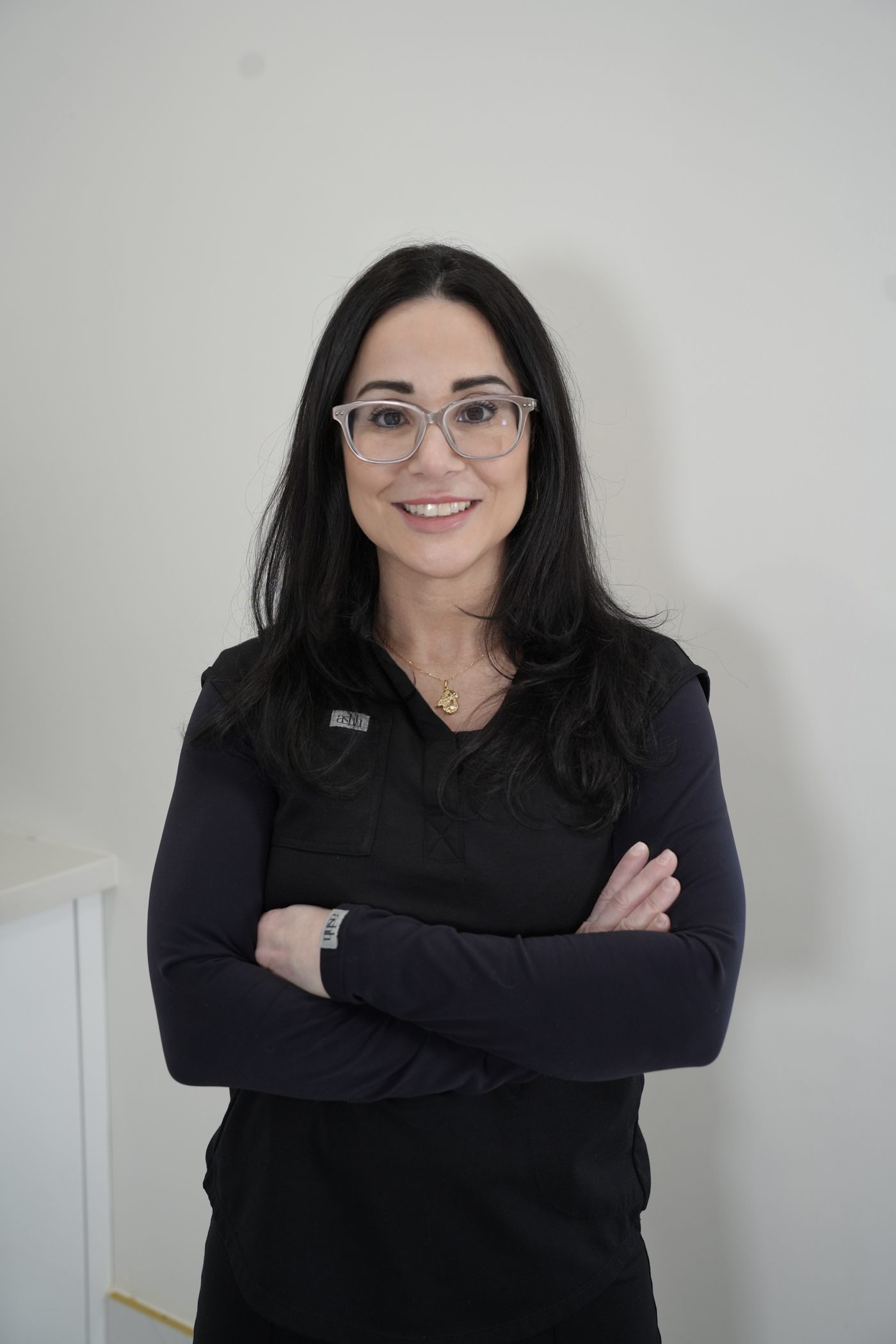
Dr. Mazzuca is a licensed physician practising medical aesthetics in Markham, Ontario, with additional training in cosmetic medicine, facial anatomy, women's health, and longevity medicine. Every treatment at the clinic is performed by her personally. Her registration can be verified through the College of Physicians and Surgeons of Ontario.
Written and medically reviewed by Dr. Monique Mazzuca, MD, CCFP. Published September 8, 2026.
This article is general information, not medical advice, and it is not a substitute for an in-person assessment. Results vary between patients, and every treatment carries risks that are reviewed with you before you consent. Suitability is determined by Dr. Mazzuca at your consultation.
More from the Journal


