Philosophy · 5 min read
What Age Should You Start Botox? The Case For and Against Prevention
There is no correct age. There is a correct sign, and most people can see it themselves.

"Preventative Botox" is one of the most searched phrases in aesthetic medicine and one of the most misunderstood. The idea is simple: if lines form because muscles repeatedly crease the skin, relaxing the muscle before the lines etch in should stop them forming. That logic is sound. The way it is often applied is not.
What is actually being prevented
Neuromodulators prevent dynamic lines from becoming static ones. A dynamic line appears only with expression and disappears at rest. A static line is visible when your face is relaxed, because years of folding have broken down the collagen along that crease. Once a line is static, neuromodulators soften it but rarely erase it. That transition, from dynamic to static, is the thing worth preventing.
It follows that treatment is only preventing something if there is a dynamic line to prevent. A twenty-four-year-old with a smooth forehead and no lines at rest or in motion has nothing to prevent yet, and treating her is not prevention. It is simply early treatment.
The sign to look for
Relax your face fully in good light. Then frown hard and release. If a faint shadow of the line lingers for a second or two after you release, or if you can see the beginning of a line at rest in the late afternoon when you are tired, the transition has started. That is the point at which a light dose, once or twice a year, meaningfully changes the trajectory.
For most people this happens somewhere between the late twenties and the late thirties, depending on genetics, sun exposure, smoking history and how expressive they are. Some very animated faces reach it at twenty-six. Some reach it at forty-two.
The argument against starting early
There are three good reasons to wait until you see that sign. First, cost: treating a problem that does not exist yet is money spent for no visible return. Second, habituation: a young patient who starts at twenty-three has a long road of quarterly appointments ahead, and it is easy to lose track of what her own face looks like. Third, over-treatment: muscles that are chronically relaxed for decades can thin, and a forehead that has lost its muscle tone in the fifties is harder to manage than one that still has strength.
What actually helps in your twenties
Daily sunscreen does more to prevent lines than any injectable, because ultraviolet light is the main driver of collagen loss. A retinoid at night, not smoking, and managing habitual squinting with sunglasses or an updated glasses prescription are the other high-value habits. None of them require an appointment.
My approach
If a patient in her twenties asks about preventative Botox, I assess her the same way I assess anyone: relaxed, then in motion. If there is a dynamic line beginning to hold, we discuss a light dose. If there is not, I tell her so, we talk about sunscreen and retinoids, and I ask her to come back in a year or two. Saying no to a treatment is part of the job.
Common questions
What is the best age to start Botox?
There is no fixed age. The right time is when a dynamic line, one that appears with expression, begins to leave a faint trace at rest. For most people this is somewhere between the late twenties and late thirties.
Does preventative Botox actually work?
Yes, in the sense that relaxing a muscle before its line becomes permanently etched prevents that transition. It does not prevent lines that have not begun to form, so starting before any line is visible in motion has little benefit.
Is Botox at 25 too early?
Usually, unless there is already a visible dynamic line beginning to hold at rest. A physician should assess you relaxed and in motion rather than treat on the basis of age.
How often is preventative Botox done?
Typically a light dose once or twice a year, rather than the quarterly schedule used for established lines.
What prevents wrinkles without Botox?
Daily broad-spectrum sunscreen is the most effective measure, followed by a nightly retinoid, not smoking, and reducing habitual squinting with sunglasses or the correct glasses prescription.
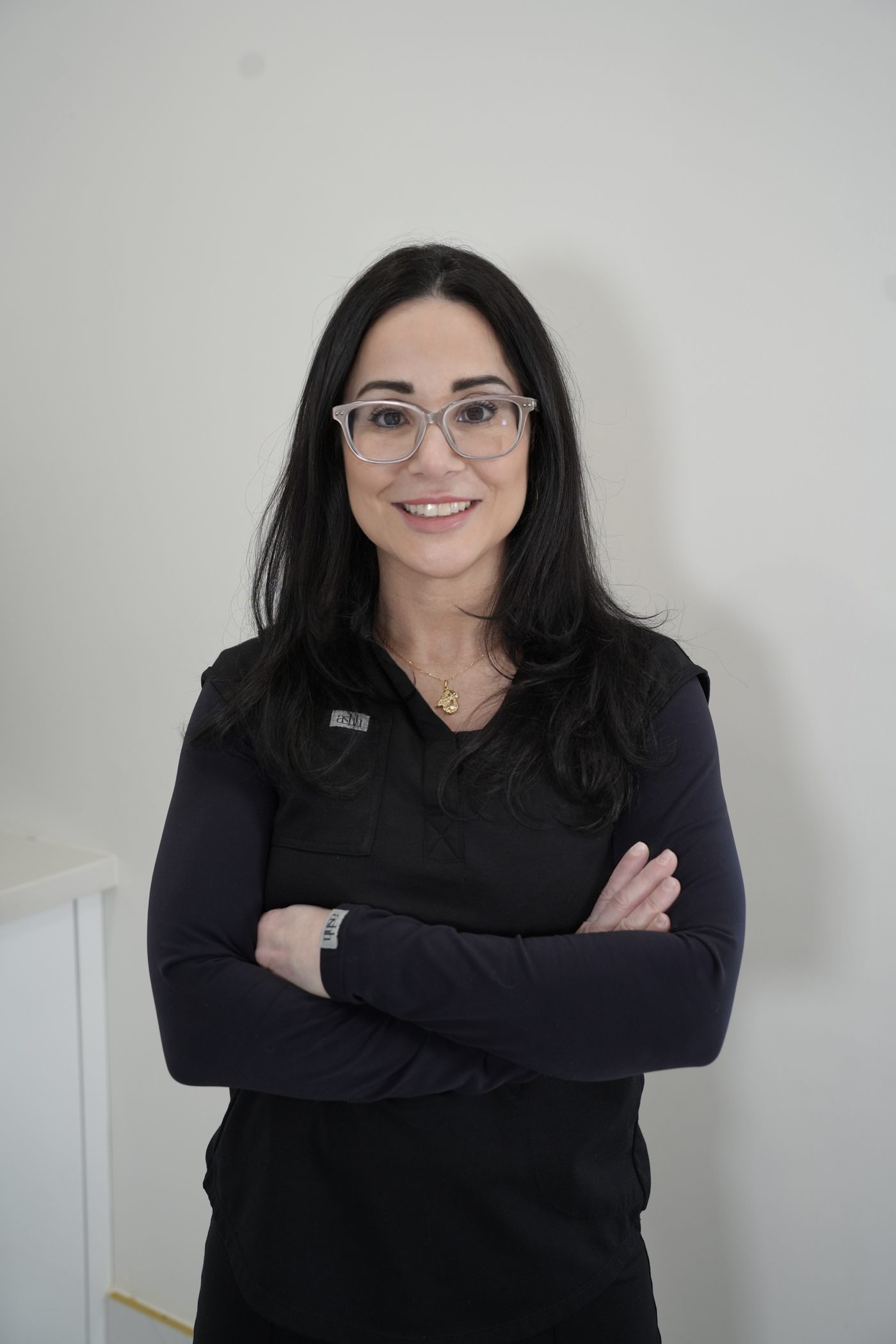
Dr. Mazzuca is a licensed physician practising medical aesthetics in Markham, Ontario, with additional training in cosmetic medicine, facial anatomy, women's health, and longevity medicine. Every treatment at the clinic is performed by her personally. Her registration can be verified through the College of Physicians and Surgeons of Ontario.
Written and medically reviewed by Dr. Monique Mazzuca, MD, CCFP. Published September 11, 2026.
This article is general information, not medical advice, and it is not a substitute for an in-person assessment. Results vary between patients, and every treatment carries risks that are reviewed with you before you consent. Suitability is determined by Dr. Mazzuca at your consultation.
More from the Journal


